HowToForYou.com – Sun exposure is one of the most common causes of dull, lifeless car paint. Over time, ultraviolet rays break down the clear coat, leaving surfaces oxidized and faded. While a full repaint may seem like the only solution, it’s often unnecessary. With the right approach and a bit of patience, you can restore much of your vehicle’s original color and gloss at home.
This guide explains how to fix sun-faded car paint using proven detailing techniques, along with insights that go beyond the basics to help you achieve longer-lasting results.
Why Car Paint Fades in the First Place
Before jumping into the process, it helps to understand the problem. Modern automotive paint typically includes three layers: primer, color coat, and clear coat. Sun damage primarily affects the clear coat, causing oxidation. Once that layer degrades, the paint appears chalky, uneven, and dull.
For You :
The goal of restoration is not to “repaint” the surface, but to remove the damaged layer and refine what’s underneath.
Step 1: Start With a Deep Clean
Restoration begins with a thorough wash. Any dirt left on the surface can cause scratches during the correction process.
Use a dedicated car shampoo and a soft wash mitt or microfiber sponge. Work in sections and rinse frequently, especially in warm weather, to prevent soap residue from drying on the paint.
For You :
After washing, dry the car completely using a clean microfiber towel.
Pro Tip
Avoid household detergents. They strip protective coatings and can worsen paint condition over time.
Step 2: Decontaminate With a Clay Bar
Even after washing, your car’s surface likely holds embedded contaminants such as road tar, industrial fallout, and tree sap.
Apply a clay lubricant to the faded areas and gently glide a clay bar across the surface. This process removes microscopic debris and creates a smooth base for polishing.
Why This Matters
Skipping this step often leads to poor polishing results and can even grind contaminants deeper into the paint.
Step 3: Correct the Surface With Polishing Compound
This is where the real transformation happens.
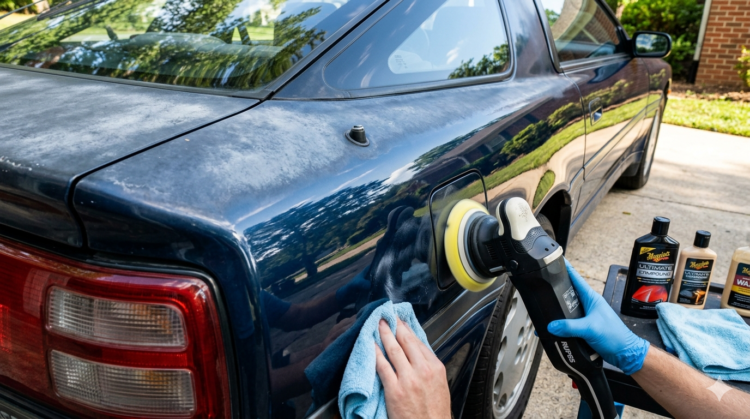
Using an electric buffer or dual-action polisher, apply a small amount of cutting compound to a damp foam pad. Work the product into the paint using slow, overlapping motions.
The compound acts like an ultra-fine abrasive, leveling the oxidized layer and revealing healthier paint underneath.
Key Insight
Work in small sections rather than tackling large panels at once. This gives you better control and more consistent results.
After polishing, wipe away residue with a microfiber cloth and inspect the surface under good lighting.
Step 4: Refine With Finishing Polish
After compounding, the paint may look brighter but still show light swirl marks or haze.
Switch to a softer polishing pad and apply a finishing polish. This step enhances clarity, deepens color, and removes fine imperfections left behind by the cutting compound.
What Makes This Step Important
Many people stop after compounding, but polishing is what gives the paint that mirror-like finish.
Step 5: Seal and Protect the Restored Paint
Once the paint looks smooth and glossy, it needs protection.
Apply a layer of car wax or a synthetic paint sealant using a clean microfiber cloth. Spread it evenly, allow it to haze, then buff it off to reveal a glossy finish.
- Wax offers a warm, deep shine but typically lasts a few months
- Sealants provide longer protection and better resistance to UV rays
For best results, consider applying multiple thin coats.
How Long Will the Results Last?
That depends on how well you maintain the surface. Regular washing and reapplying protection every few months will significantly extend the life of your restored paint.
Parking in shaded areas or using a car cover can also slow future fading.
When Restoration Isn’t Enough
If the clear coat has completely failed—peeling or flaking—polishing won’t fix the issue. In those cases, repainting or professional refinishing becomes necessary.
Final Thoughts
Learning how to fix sun-faded car paint can save you a substantial amount of money while extending the life of your vehicle’s exterior. More importantly, it gives you control over the outcome. With the right tools and technique, even severely dull paint can regain much of its original depth and shine.
The process takes time, but the results are often surprisingly dramatic.