HowToForYou.com – All-terrain vehicles (ATVs) offer a unique mix of freedom and adrenaline, but they also demand respect. For beginners, the difference between an enjoyable ride and a dangerous mistake often comes down to preparation and technique. This guide breaks down how to ride an ATV safely, with a focus on real-world habits that experienced riders rely on—not just the basics.
Why Learning How to Ride an ATV Properly Matters
ATVs are not casual recreational toys. They’re powerful machines designed to handle uneven terrain, sharp turns, and changing traction. Without the right approach, even a low-speed ride can lead to loss of control. That’s why new riders should treat their first few sessions less like an adventure and more like skill-building.
How to Choose the Right ATV for Beginners
Before you even start the engine, your choice of ATV matters.
A beginner-friendly ATV should feel manageable, not intimidating. If you struggle to reach the handlebars comfortably or can’t operate the foot controls with ease, the vehicle is too large. Many new riders make the mistake of choosing a more powerful model than they can handle, which increases the risk of accidents.
For most adults, a mid-sized sport or utility ATV works well. Younger riders should always use smaller, lighter models designed for their size.
How to Prepare for a Safe Ride
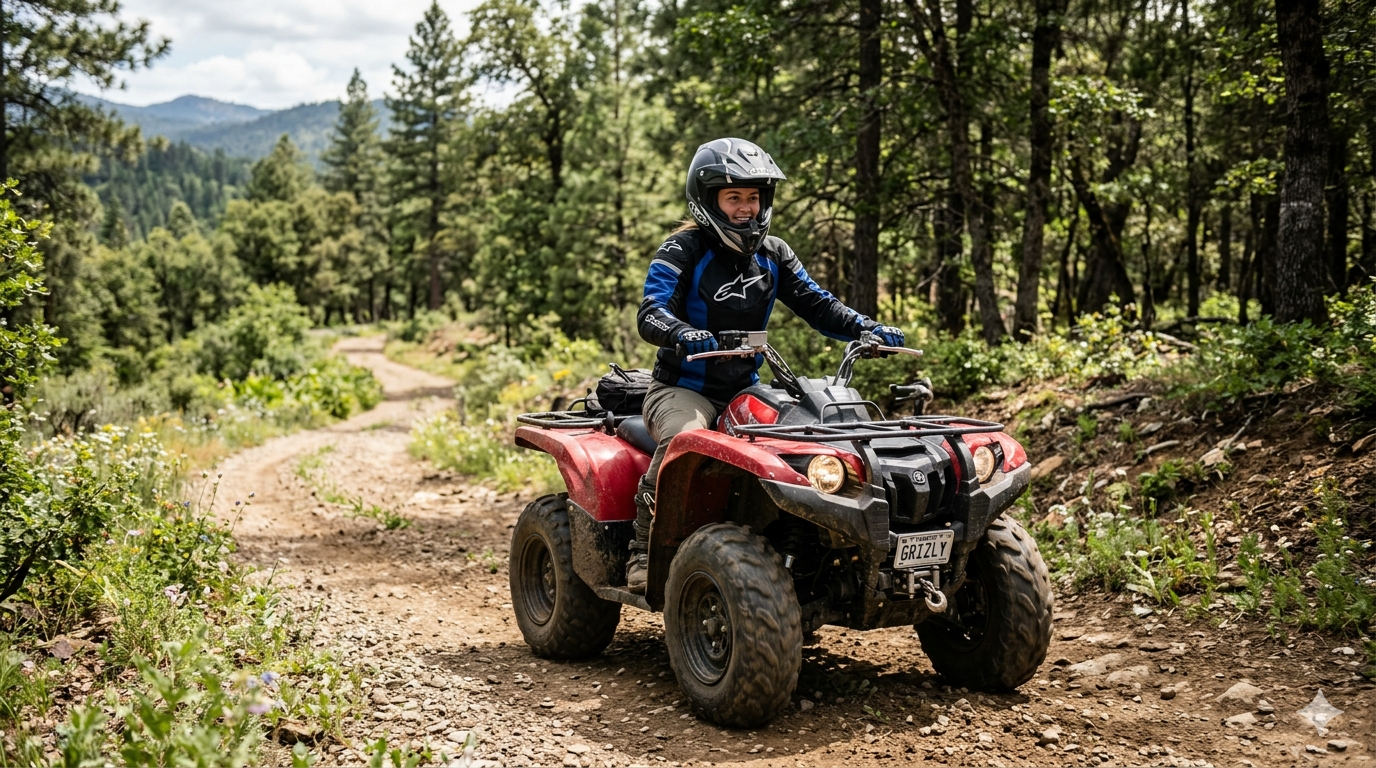
Wear the Right Protective Gear
Riding without proper gear is one of the most common—and avoidable—mistakes.
At minimum, you should wear:
- A properly fitted helmet
- Gloves for grip and protection
- Over-the-ankle boots
- Eye protection such as goggles
This isn’t about overcaution. Even minor falls can cause serious injury without protection.
Check Your Setup Before Moving
Before starting, take a moment to get familiar with your ATV:
- Locate the throttle, brakes, and clutch
- Identify the gear shift (if manual)
- Ensure your footing is stable on the pegs
Many beginner accidents happen simply because riders panic and hit the wrong control.
How to Start Riding an ATV
Begin in a Controlled Environment
Start in a wide, flat, obstacle-free area. Avoid trails, hills, or crowded spaces until you’re comfortable with the basics.
Think of this stage as practice, not exploration.
Start the Engine and Get Into Gear
Turn the ignition key and allow the engine to idle briefly. For manual ATVs:
- Pull in the clutch
- Shift into first gear using your left foot
- Slowly release the clutch while applying light throttle
If you’re using an automatic ATV, you can skip gear shifting and focus on throttle control.
Build Speed Gradually
Resist the urge to accelerate quickly. Smooth, gradual throttle control helps you stay balanced and in control. Practice moving forward, stopping, and repeating until it feels natural.
How to Control Your ATV While Riding
Master Braking Technique
Proper braking is more nuanced than it looks.
Start with the rear brake (right-hand lever), then gently apply the front brake (left-hand lever). Grabbing both brakes suddenly can cause instability, especially on uneven terrain.
Learn How to Turn Safely
Turning an ATV requires active body movement.
When turning:
- Lean your body in the direction of the turn
- Keep your feet planted firmly on the pegs
- Maintain a steady, controlled speed
Unlike a car, simply turning the handlebars isn’t enough. Your body position plays a key role in stability.
Shift Gears Smoothly (For Manual ATVs)
As your speed increases:
- Shift up one gear at a time
- Ease off the throttle slightly during shifts
- Downshift gradually as you slow down
Rushing gear changes can cause jerky movement and loss of control.
Common Beginner Mistakes to Avoid
Attempting Tricks Too Early
Wheelies and other stunts may look fun, but they are risky even for experienced riders. For beginners, they can easily lead to the ATV flipping backward.
Riding on Paved Roads
ATVs are built for off-road use. Riding on paved surfaces reduces tire grip and increases the risk of collisions with other vehicles. In many areas, it’s also illegal.
Taking Your Feet Off the Pegs
Keeping both feet on the footrests is essential for balance and control. Letting your legs hang can shift your weight unexpectedly or cause injury if your foot catches on something.
How to Improve Faster and Ride with Confidence
The fastest way to improve is structured practice. Focus on:
- Smooth acceleration and braking
- Controlled turns at low speed
- Gradual exposure to more complex terrain
If available, consider enrolling in a certified ATV safety course. Learning from an experienced instructor can help you avoid bad habits early on.
Final Thoughts
Learning how to ride an ATV safely isn’t about memorizing steps—it’s about building control, awareness, and good judgment. Start slow, stay disciplined, and treat every ride as a chance to improve your skills.
Once you develop a solid foundation, the experience becomes far more enjoyable—and much safer.