
Table of contents:
HowToForYou.com – For many adults, difficulty concentrating feels like a sudden loss of a skill they once took for granted. Tasks that used to require little effort now demand intense concentration, and distractions seem harder to ignore. While aging plays a role, declining focus is not inevitable. Understanding why attention weakens and learning how to address it can make a measurable difference.
This article explores how to improve focus over time by examining what disrupts concentration and what science suggests can help restore it.
Why focus becomes harder with age
The brain, much like the rest of the body, changes over time. Normal aging can affect how efficiently it processes information and filters distractions. Researchers point to several biological contributors, including low-grade inflammation, reduced blood flow from vascular changes, and the gradual loss of brain volume that occurs naturally with age.
For You :
Beyond these structural shifts, everyday health factors often play an even larger role. Conditions such as depression or untreated sleep disorders can quietly undermine attention. Hearing and vision loss also force the brain to work harder just to interpret basic information, leaving fewer resources available for concentration. In these cases, focus problems are not only cognitive but also sensory.
Medication effects deserve equal attention. Certain commonly prescribed drugs, particularly those with anticholinergic properties, are known to slow thinking speed and reduce mental clarity. Alcohol consumption, especially when excessive, further compounds the problem by disrupting sleep and impairing judgment.
Then there is the modern environment. Constant alerts, notifications, and information streams challenge the brain’s ability to prioritize. Over time, this overload weakens the mental filtering system that allows sustained attention.
For You :

How to retrain attention with focused practice
One effective way to improve focus is to practice sustained attention deliberately. Neuropsychologists often recommend single-task exercises that encourage the brain to notice and correct lapses in concentration.
A simple example is focused reading. Set aside 30 minutes with a book or article and use a timer that sounds every five minutes. When it goes off, briefly check whether your mind wandered. If it did, calmly return to the text. This process strengthens mental monitoring, a key skill behind sustained attention. Over time, the brain becomes more efficient at recognizing distractions before they take over.
This approach works because attention is not just a passive state. It is an active process that can be trained, much like a muscle.
For You :

How to use mindfulness to strengthen focus
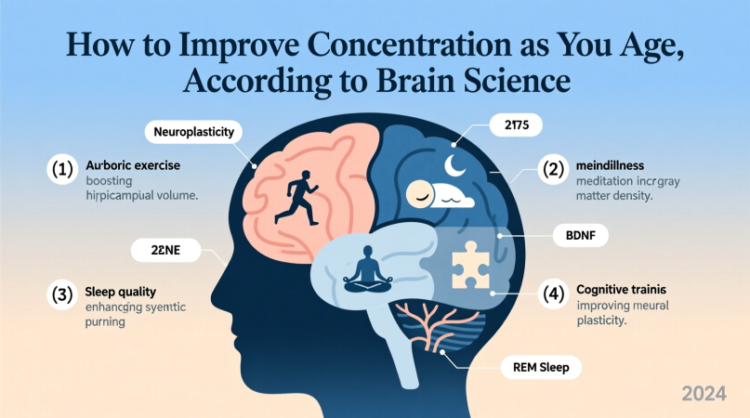
Mindfulness has gained attention not as a trend but as a practical cognitive tool. At its core, mindfulness involves deliberately focusing on the present moment. Studies suggest that regular mindfulness practice can strengthen neural networks related to attention and self-regulation.
To begin, sit quietly for a few minutes each day and focus on your breathing. Notice physical sensations and surrounding sounds without trying to change them. When your thoughts drift, gently bring your attention back. This repeated redirection builds the brain’s capacity to stay focused during everyday activities.
Importantly, mindfulness does not require long sessions or specialized training. Consistency matters more than duration.
How to approach cognitive training realistically
Digital brain games often promise sharper focus and faster thinking. Research on their effectiveness is mixed, but experts agree on one point: the goal is not mastery of the game itself but improvement in real-world attention.
Cognitive training appears most beneficial when it gradually challenges a person to maintain focus for longer periods or under slightly more demanding conditions. Progressively increasing difficulty can help extend attention span, and in some cases, these gains carry over into daily life.
The key is to treat cognitive training as one component of a broader strategy, not a standalone solution.
How lifestyle choices influence concentration
Few factors affect focus as powerfully as sleep and physical activity. Sleep allows the brain to clear harmful proteins, regulate stress hormones, and consolidate cognitive function. Adults should aim for seven to eight hours of quality sleep each night.
Exercise also plays a direct role. Aerobic activity increases blood flow to the brain and supports the release of chemicals that promote new neural connections. Health authorities recommend at least 150 minutes of moderate aerobic exercise per week, such as brisk walking.
Diet matters as well. A Mediterranean-style eating pattern rich in fruits, vegetables, whole grains, fish, and healthy fats has been linked to better brain health and cognitive performance. Managing chronic conditions and reviewing medications with a healthcare provider can further remove barriers to focus.
The takeaway
Aging may change the brain, but it does not eliminate the possibility of strong concentration. Learning how to improve focus starts with identifying what is interfering with attention and addressing it through targeted habits. By combining focused practice, mindfulness, healthy routines, and medical awareness, many adults can reclaim a sharper, more reliable attention span.
While getting older is unavoidable, how you support your brain remains largely within your control.